
navneetkumarbakshi / Blog / 8 months ago /
This article is saved in my files also as
China Rural- Family Size, Countryside, Income
This article is in continuation of
NanZhou Is A Sixth Level City (Part 1) but while I was writing it, I drifted to read and learn more about China from the Internet. Let me share it all with you
Mr. Cheng has sent me some corrections after reading my previous post
As regards the high cost of school fees he says, “Most of the people can’t afford this high fee but the fact is that though 3000~4000 Yuan is not a small amount but because of the one-child policy most families can afford the high fees even it means the parents have to work harder. The good news is some parts of china high school are free too and at more and more places high school education is becoming free. (Possibly different provinces have different education policies)
He says that the picture that I thought was of a bus stop was indeed of a Notice board. The buses I infer are not allowed inside the premises for the reasons of security. Further impressing upon the measures adopted by the administration to ensure safety of the pupils he says “If you are not a student or an employee of the school, you cannot get in. Every school has a mini police station, and the police guard at the gate.
“Some years ago there were some instances of knife attacks on the children of primary schools. The culprits were disgruntled elements, mentally disturbed or those venting their ire against oppressive, indifferent policies of the government. They were however apprehended and promptly executed. I believe the security cordon around the schools was further strengthened then.”
The incident of trafficking of children and women in China is very high. The stolen children are sold to rich, issueless parents in the country or at remote places. A traditional preference for boys and one child policy have contributed to the rise of child trafficking. The kidnapped women are sold to men in remote areas who are unable to find women to marry because of sex ratio imbalance that has resulted because of one child policy and sex- selective abortions. I have learnt from my Chinese friends that the government has somewhat relaxed one child policy which has been in force for thirty years and has created serious sex ratio imbalances.
Because of this policy the young people have a lot of emotional pressure and guilt for not being able to keep their aging parents with them as it’s hard to think of a household where both sets of in-laws live under the same roof with their children. The apartments in China are essentially designed for single unit family with one child. As such, with one set of parents living with the a couple who have a child too, it becomes a motley crowd. One bathroom is attached with a bed room, while the other one is common. One room meant for the child is smaller in which a double bed cannot fit in. A two bedroom, study cum child room, a drawing cum dining, kitchen and two bathrooms set in a good locality in Shanghai will cost you more than 5000 Yuan ( 1 USD= 6.1 Yuan now) a month, which a normal family cannot afford.
He says- “By one child policy, most of the Indians as far as I know think, means that all Chinese couples can only have one child, which is not true.”
A Han Chinese couple who live in the city can have only one child but if the first child is not healthy (by which I think he means of unsound mind or is handicapped) then they can have a second one.
A Han Chinese couple living in a village can have two children.
A minority community Chinese couples who live in cities can have two children.
A minority community Chinese couples who live in villages can have three children.
A Han-minority nationality Chinese couple can have two children.
So, the Chinese government too has special concessions for the minority communities although they do not have vote seeking agendas before them unlike their Indian counterparts :))
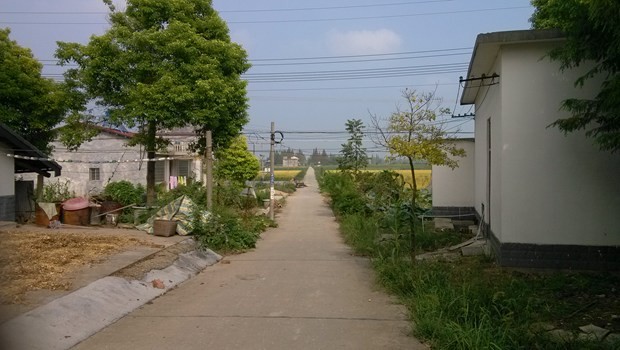
Countryside:
Water:
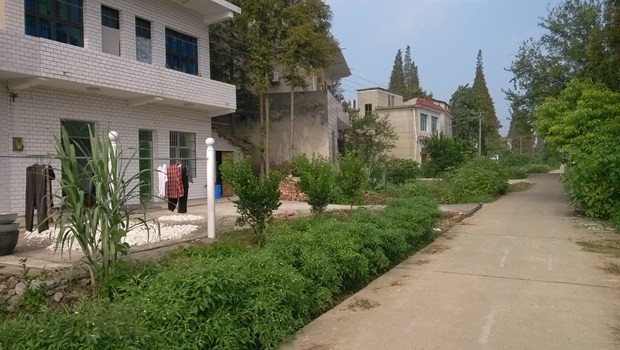
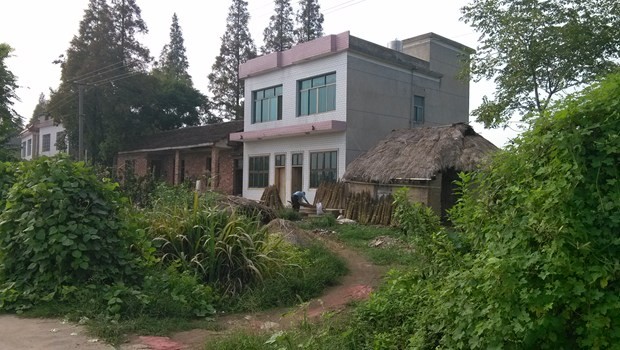
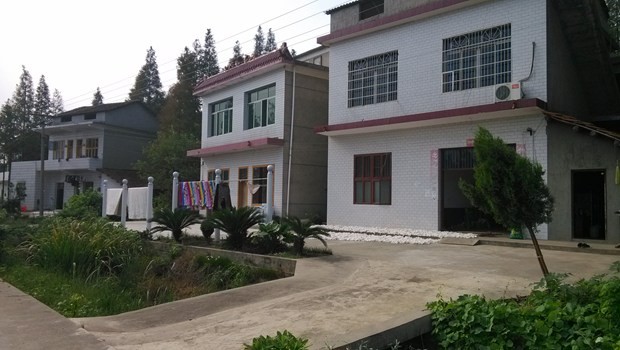
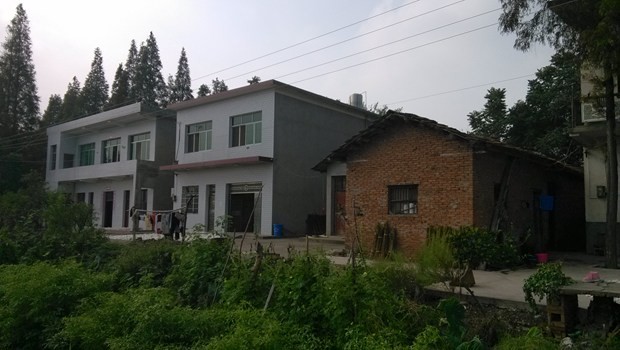
Mr. Cheng says :- “Nan County has plenty of water. We have many lakes and rivers and we don’t have many factories here so the water is not a problem. We use groundwater for drinking. You can see some metal pots (storage tanks) on the roofs. They are the water towers. Western China doesn’t have enough groundwater to use, so there they have to build many cisterns to save the rain water.”
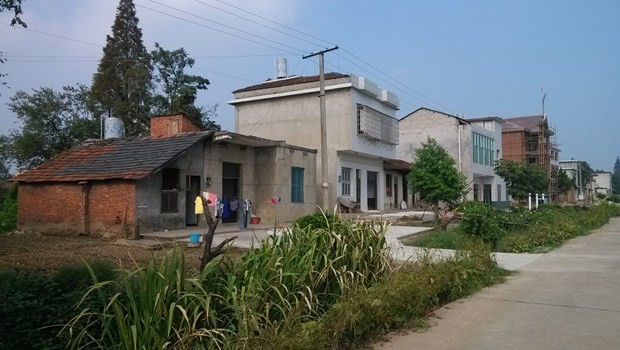
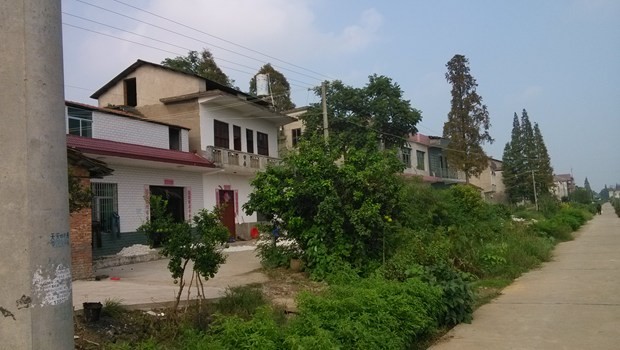
Notice the Solar Heater
Income:
“All land in China belongs to the government but every adult can rent a land for which one should be a registered permanent resident and farmer by profession. You have to pay the agriculture taxes and the rent. In January 2006 agriculture tax was abolished. Now the farmers can get subsidy from government. However the income from farming is not high and the youth doesn’t like the hard work that farming requires, so the present day children are migrating to the cities in search of better life.”
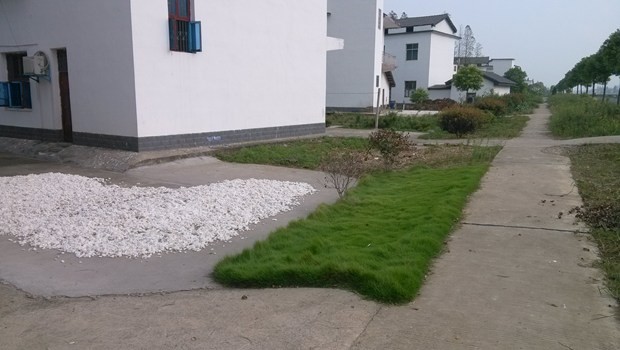
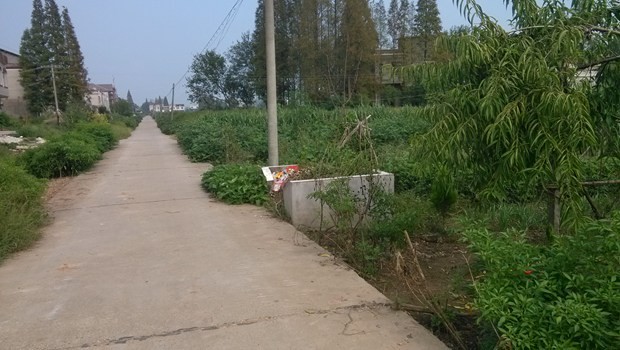
[The plots of lands which these farmers work on are small as I see from the pictures]
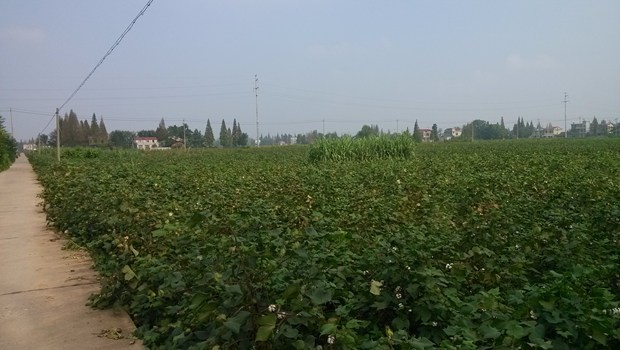
Cotton Field
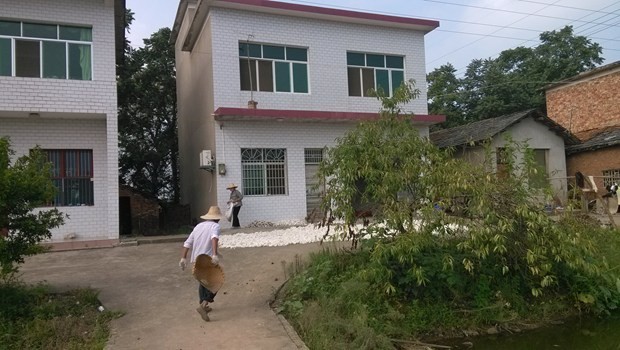
Small Produce
In 1958 as a result of “Great Leap Forward” initiated by Mao, land use was put under control of the government with an intention of improving the output. Collectives farming or “Communes” were set up and private food production was banned. Even the food was cooked and served in common canteens.
But Mao was obsessed with industrialization. This led to neglect and inefficiency in the agriculture sector that subsequently resulted in a Great Famine. Private plots were reintroduced in 1962 but still communes remained the dominant units. In 1978 family Production Responsibility System was created and the communes were dismantled.
The responsibility of agriculture production thus reverted back to the individual households. The households are now given the quotas of crop output which they have to provide to the “collective units” in return for the tools, animals, seeds, fertilizers etc. The households get the farmlands from their units on lease but they are free to use it the way they want, long as they meet their assigned quotas.
If such land reforms could be implemented in India then ninety percent of the court cases including land disputes and related murders would get solved and many judges and the lawyers would become jobless. Moreover there would be no instances of the land grabs by the mighty and the influential by force or in quid pro quo deals. While the rich own acres of land in India and enjoy all the tax exemptions and the subsidies extended to the agriculture sectors, the poor can’t even make both ends meet. On top of that their land holdings continue to reduce because of successive divisions among the siblings.
Prime land in Singur was given by the government to Tatas for installing a Car (Nano) manufacturing unit. 997 acres of land was acquired by the government using an outdated law, displacing the farmers. It became a political imbroglio and riding anti-government wave the present Chief Minister Mamta Banerjee came in power as she promised to return the land to the poor farmers. She has been in office since more than two years now and the land hasn’t yet got returned to the farmers because now it is stuck in litigation. The TATAs afterall didn’t get the land in charity. Some people must have made money then and some will make now. As normally happens, the land prices shoot up when a big project is envisaged in a remote area. The people who first agree to sell their lands feel cheated. Some people do get cheated and some become rich, overnight. Nobody knows about the fate of those farmers who sold their lands or were forced in to selling that. I personally feel that if the area had become industrialized, the farmers would have got alternative occupation than tilling small patches of land which can’t even provide for their families.
But the problem in India is that the politicians use rhetoric to generate mass hysteria and garner support of the illiterate populace showing them dreams which have little rationale. Once they come in power, they can’t convert the dreams of the poor in to reality but they are able to realise their own. Over the years they become shrewd manipulators in power politics. Mr. Lallu Parsad Yadav who came in the political arena riding a wave of mass movement against corrupt governance played in the corridors of power for seventeen years till the recent repealing of a law (that gave protection to the convicted MPs and MLAs) was struck down by the Supreme Court, caught up with him. He is now cooling his heels in jail but the most frightening thing is that the present government in power was trying to bring in an Ordinance against Supreme Court’s verdict to safeguard the interests of more than 30-40% of the sitting MPs and MLAs who have pending cases of not only corruption or amasising wealth but serious crimes like rapes and murders against them. If this be the intent of the people who are under oath to serve the interests of the people who vote them to power, even the God can’t help build that nation.
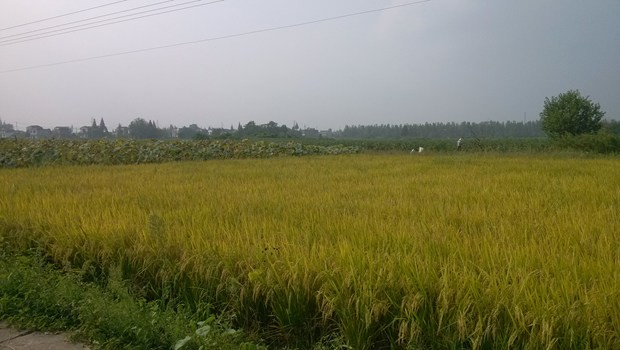
In China the people are often relocated and the people always have grudges against the government’s decision. I searched the internet and found many instances of violent protests against ruthlessness of the local governments and corrupt officials. I have never seen a deal in which every participant is happy. There are always disgruntled elements, some genuine and some because of ulterior motives. Even when a mother cuts portions of a pie or a pizza without bias, there is always a child who isn’t happy, who sulks for having got an unfair deal. I am not sure if the farmers in China are happy or not but in India, many rich so called farmers owning hundreds of acres of lands are ministers.
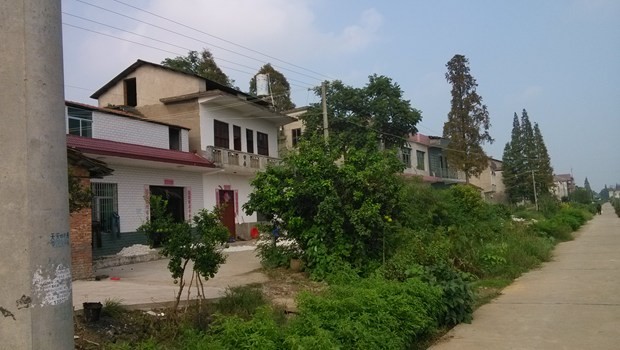
They are instances of their wealth increasing astronomically with in short tenures of them coming in power. In every government there are people, like the friends and the relatives of the people in power, who benefit from the system but no matter which system or the government be in office, the bureaucrats, the gubernatorial machinery always benefits.
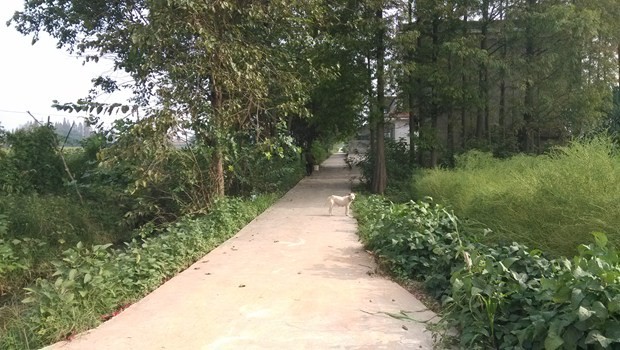
Scared, Lone Survivor :)))
It is impossible to think of a setup where everyone is sincere and upright. Such utopian world doesn’t exist and it is fool hardy to think that any number of reforms can bring about a change in the hearts of the people. The present regime in China has created its own set of millionaires and billionaires.
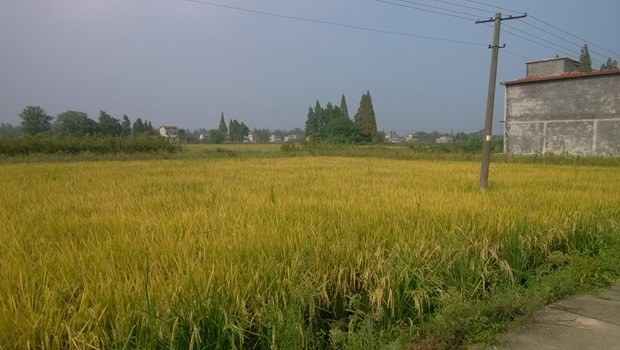
Rice Fields
It will be wrong to say that the Chinese officials don’t make money and the Indians do. It will be wrong to say that while the Indian ministers are corrupt the Chinese are a sincere dedicated lot. It’s not for me to do a back ground check on every man in power. I am sure my readers will agree that it’s not our collective desire. We just want to see our countries progress, even if the men in power and high positions take small dips in the country’s riches, let them not drown themselves in it. Let that not be all that they do. A country is not ruined by a few acts of depredation by people in high offices but by moral depravity of the citizens in general.
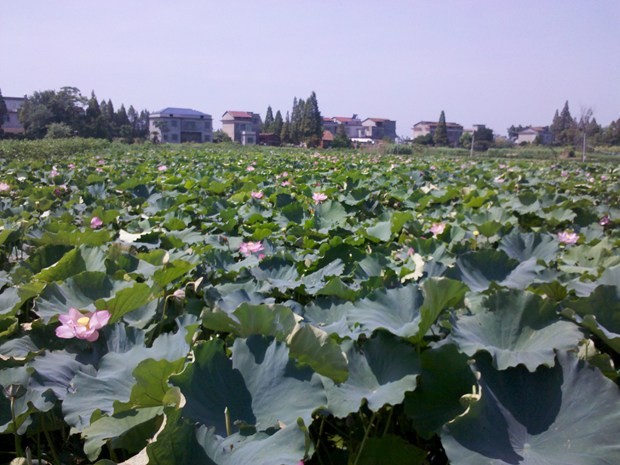
Lotus Plantation
I read the following articles while making this blog. Sharing these with you will not be out of context, I think. I am posting these here for the benefit of the readers ( Re-posted with due credits to the original writers)
“There are widespread misconceptions about numerous aspects of the Chinese revolution. These include a misreading of the Great Leap Forward, the Cultural Revolution, and the “reforms” of the post-Mao era, and the reaction of the overwhelming mass of the peasantry to these movements. Although the revolutionary programs/movements resulted in significant hardships — on the rural population (the Great Leap Forward, 1958-61) or the intellectuals (the Cultural Revolution, 1966-76) — they both produced concrete achievements in the countryside that led to impressive gains in agricultural production and in people’s lives.
In contrast, the post-Mao era “reforms” have resulted so far in a huge growth of inequality in China, with the rural population suffering greatly by the dismantling of public support for health and education. In addition, local and regional officials have sold farmland for development purposes, usually lining their own pockets, with inadequate compensation for the farmers. This has resulted in the current massive unrest in rural areas, involving literally, hundreds of thousands of incidents with protesting farmers.”
(Dongping Han (han2000_28815@yahoo.com) is professor of history and political science at Warren Wilson College in North Carolina. His publications include several journal articles and The Unknown Cultural Revolution (Garland Publishing, republished by Monthly Review, 2008). He comes from a rural background in China. Most of the research for this article was carried out by means of interviews in the rural areas discussed.)
http://monthlyreview.org/2009/12/01/farmers-mao-and-discontent-in-china
PROBLEMS FACED BY FARMERS IN CHINA
http://factsanddetails.com/china.php?itemid=346
While conditions have improved for city dwellers and incomes are rising in the cities conditions for farmers has gotten worse. In many cases their incomes have dropped as their expenses have risen and food prices have dropped due to surpluses of crops and decreased demand from middle class Chinese. By some estimates the income gap between farmers and urbanites may be 1 to 6.
Farmers are poor but often pay proportionally more taxes than everyone else. One farmer from Anhui province told the Asahi Shimbun, “If were discharge smoke, we have to pay a pollution tax. When we get married they tell is we have to pay a marriage tax.” In some cases after they pay their taxes they have little or nothing left over other than the food they stashed away to eat.
Taxes often eat up more than half of farmers’ annual incomes. The taxes are sometimes collected by corrupt officials who are trying to enrich themselves, often though they are collected on behalf of the bankrupt governments desperate for revenues to provide basic services. In recent years farm taxes have been reduced or in some cases, eliminated.
The government monopolizes grain harvests and often prevents farmers from selling their crops on the open market. Local officials have been described as “locusts” for the way they try to squeeze farmers for all the money they can. Government land leases have been called “chains on peasants.” Record harvests have caused more problems than they have solved. In some places the government charges farmers to store grain when they are under obligation to buy it.
More than 200 million farmers have left farming. Many are migrant workers or work at dangerous, low paying jobs. Between 300 to 400 million peasants are expected to have moved to the cities by 2020. Raising productivity is hard when only elderly people and women are working the fields.
Debbie Hu wrote on MCLC List: I’m worried that China’s food economy is going down the same road as America’s. All the media hype around food safety violations seems to have everyone shopping at supermarkets and asking for more government food regulation. It’s becoming harder and harder for small-time farmers to sell their crops directly in the market; people like my grandma are willing to pay ten times more for vegetables sold at supermarkets because she doesn’t trust small farmers. I’m betting these surplus profits aren’t going to the labourers on these farms.
Hard Times for Chinese Farmers
David Pierson wrote in the Los Angeles Times, China’s farming households are struggling to capitalize on their nation’s breathtaking economic development. While city dwellers are enjoying fast-rising living standards, much of rural China remains a hardscrabble landscape where average incomes of about $3,200 a year are less than a third of what they are in urban areas. [Source: David Pierson, Los Angeles Times, July 07, 2011]
Chinese farmers don’t have crop insurance to protect them against disaster; government subsidies are minimal. Because they don’t own their land, growers can’t borrow against it and have little incentive to improve operations. Reliable market forecasts are hard to come by, leaving farmers to speculate about what to plant. Poor roads in many parts of the countryside force growers to sell their harvests locally or to middlemen who pocket much of the mark up paid by city dwellers. Add rising costs for labour, seed, fertilizer and fuel, and many producers are seeing their profits squeezed even as retail prices soar.
“No one is going to get rich off farming,” said Scott Rozelle, an expert on China’s rural economy at Stanford University. “It’s not going to happen until farm sizes get bigger. That’s why millions of people are moving to the cities.”
Agricultural Land in China
Farm land is still owned and controlled by the state and leased to farmers. It cannot be bought or sold, only leased. Land essentially belongs to local governments, a holdover from the commune era. Reforms passed in the Deng era allowed individuals to contract land from villages. To be converted into non-agricultural land it has to be reclaimed by the government and re-zoned.
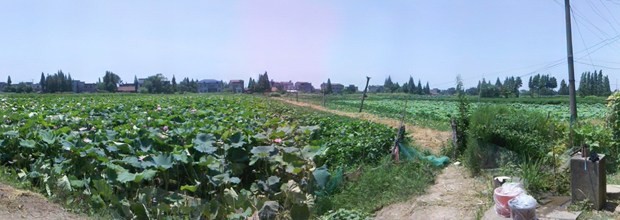
Peasants often have little say on the fate of the land they work even though it may have been worked by their families for generations.
Most farmland is measured in mu, which is roughly equal to a sixth of an acre. On average a household tends a plot of land measuring 1.2 acres but can be as small as an eighth of an acre.
These days farmers sign 30-year leases for the right to work a plot and but they no longer are required to pay harvest quotas or most agricultural taxes. They don’t own the land, they can’t sell it and they can’t use it for collateral on a loan.
Farmer Revolts In China
Farmers have revolted over high taxes, access to water and corruption of local officials. Thousands of villagers in Shandong rioted to gain access to drinking and irrigation water during a severe drought. In January 1999, 10,000 angry farmers confronted police in southern Hunan. One protester bled to death after he was hit in the head with a tear gas canister.
Farmers Angry About Taxes.
In May 2001, farmers in Liushugouzi, a village in Shandong province, protested an effort by local officials to collect overdue taxes. The officials had set up “special courts,” that reminded some of the kangaroo courts from the Cultural Revolution, and hired thugs armed with electric batons to beat up farmers who didn’t pay. After one farmer was badly beaten up, other farmers grabbed hoes and shovels and sticks and battled the thugs. The riot didn’t end until ambulances and more officials arrived. Afterwards, the farmers took the officials to court
There have been considerably fewer protests by farmers after the national tax was abolished.
Beijing has also begun to control that multi-tiered systems that forced farmers to pay annual fees to village, county, municipal and provincial authorities,
Unfair Taxes In China
Excessive taxation, local corruption and declining incomes are problems faced by many people in the countryside. In many places officials impose high taxes and then siphon off the money for S.U.V.s and drinking, karaoke parties and prostitutes.
Under Chinese law, the government cannot tax farmers more than 5 percent of their income but that doesn’t stop tax collectors from collecting more. In some places where farmers only earn about $44 a year after they pay for fertilizer seeds and supplies. This means they should pay $2. Instead they are taxed $36. Farmers who resist have their food and cash crops taken by cadres and have high fines slapped onto their tax bills.
In some cases officials tear down homes and severely beat people who don’t pay their taxes. One man who demanded to see how his tax money was spent was attacked at home by thugs who took away his family’s pigs and food supply.
Farmers are poor but often pay proportionally more taxes than everyone else. One farmer from Anhui province told the Asahi Shimbun, “If we discharge smoke, we have to pay a pollution tax. When we get married they tell us that we have to pay a marriage tax.” In some cases after they pay their taxes they have little or nothing left over other than the food they stashed away to eat.
Taxes often eat up more than half of farmers’ annual incomes. The taxes are sometimes collected by corrupt officials who are trying to enrich themselves although often they are collected for bankrupt governments desperate for revenues to provide basic services. In recent years farm taxes have been reduced and eliminated.
Ian Johnson wrote in the New York Review of Books, “When I looked at rural unrest in China a decade ago, I was surprised that many farmers found out by watching television news that they were being overtaxed. Aware that local officials were overtaxing locals and causing riots, the authorities in Beijing broadcast new tax codes, making sure that people knew that it was not government’s policy to tax them to death. Some locals rioted and many others filed class-action lawsuits—but in the end local taxation was reduced (and eventually eliminated entirely). This wasn’t despite central government efforts, but because of them. The result is that rural protests, which were a regular feature of 1990s China, are far less common.” [Source: Ian Johnson, New York Review of Books, December 22, 2011]
Tax Revolts in the 1990s in China
In May 1998, unhappy farmers staged a demonstration to demand tax relief. When a provincial Communist Party official tried to negotiate he was taken hostage. A thousand riot police were called in before it was over. Numerous people were injured and 28 cars were damaged. Eleven people were arrested. A leader was given a sentence of 11½ years in prison.
In January 1999, a revolt broke out after a peasant committed suicide because he couldn’t pay an arbitrary tax on slaughtered pigs levied by a local official to coincide with the Chinese New Year. Over 10,000 angry peasants marched on party headquarters, overturned the cars of Communist officials. The People’s Armed Police had to be called in to restore order.
Tax Revolts in the 2000s in China
In April, 2000 villagers in Jianxi clashed with police during a demonstration on taxes. Near dawn 500 armed troops and police fired into a crowd, killing two peasants and wounding 18 more. The peasants had been quarreling with officials for three years over excessively high taxes. Jiangxi had a series of problems. Much of it began in 1998, when farmers had their taxes raised even though many had lost their crops to Yangtze River floods.
In August 2003, more than 10,000 farmers in Jianxi protesting high taxes rampaged through the offices and homes of Communist Party officials. In January 2004, villagers protesting high taxes in Yutang in Jiangxi were shot at by troops. Two men were killed.
The government is trying to help the farmers by offering more relief and cracking down on the officials that try to cheat them. In some places where reforms have been implemented farmers pay two third less than they used to. Taxes on smoking and marriage were eliminated. The problem is that local government bodies that relied on the money from the central government during the Mao era no longer receive it and have to make significant cuts or find ways to increase revenues.
These comments were posted by the people who read it at Sulekha.com, when I posted it in 2014. The title I had given to this post was
China Rural- Family Size, Countryside, Income
All Comments
navneetkumarbakshi / / 8 months ago

Hello Rabbit C,
Don’t worry about your poor English. it’s neither your national language nor your mother tongue. Why should a thought of not being good at it bother you? Does a thought of not knowing Chinese bother a Britisher or an American? You are welcome here and I am happy that you have expressed yourself well despite your inability to express in a foreign language.
Navneet
navneetkumarbakshi / / 8 months ago

Thanks a lot for the links Cindy. I have some plans that I can’t discuss here. Can you give me an e-mail address to contact you later?
Regards
Navneet
Cindy / / 8 months ago

http://www.youtube.com/watch?v=5TcqYziXOe0
http://www.youtube.com/watch?v=hxkCbpckOtI
come and have fun over here.
Suresh Rao / / 8 months ago

Navneet
This is a great story with authentic pics from rural China. Your narrative and comparison with India is appropriate in parts. Thanks for posting.
When do we see your photos and blogs from Australia? Hopefully soon I presume.
navneetkumarbakshi / / 8 months ago

Thanks Suresh Ji,
I think I should start writing about my experiences of Sydney now. I have been here for six months and haven’t yet written even one blog about here. I am so occupied with the material I keep getting from my fans in China :)) that I just can’t devote time..and I am very slow too. Will post blogs about Sydney soon.
Navneet
Anneshwa / / 8 months ago

Really interesting blog. Once I went to China (Dalian, to be specific) for about 5-6 days, but didn’t get the chance to actually interact with Chinese people except a few.
navneetkumarbakshi / / 8 months ago

Thanks Anneshwa,
The rapid pace of progress in China is what really attracted my attention when I went there to work. In a few days one can hardly get time to know about the place and interact with the people and with Chinese one can’t interact anyway because of the language barrier. I haven’t been to Dalian and no one had written to me from there yet. It’s a big place I know.
Navneet
xiong / / 8 months ago

When did you write this in China? I was half Indian origin China, you know Chinese farmers how to work it? Answer: You certainly written 10 years ago, Chinese farmers, farmers now China is basically mechanized farming, they do not pay any taxes, but also get state subsidies, but some places are technological planted acreage in India is China four times, but the output Chinese food is up to them than the urban population of farmers’ income is high, you can now see what it was like under the Chinese countryside, like a house of farmers live in villas, China poor quality milk drinking kids can grow up watching us back home eyes help malnourished children in distressed!
navneetkumarbakshi / / 8 months ago

That’s a lot of contradictory information Xiong and if you send to me the facts and figures, I will post another blog. The pictures in this blog are from one Mr. Cheng, so they are all recent as is the part of the text sent by him, which I have put verbatim. Rest of the information is from the internet, from the articles as recent as of 2012-13. Yes, when I was in China, during the harvesting season, thee would be hundreds of harvesters on the roads though I didn’t see many tractors during plantation season. But I was living in the cities and didn’t travel to remote interior of China but all these blogs that I post these days contain the information sent to me by the people from different parts of China.
Navneet
dmrsekhar / / 8 months ago

Navneet Sb,
Excellent blog. “A country is not ruined by a few acts of depredation by people in high offices but by moral depravity of the citizens in general.” So much truth.
Thanks,
DMR Sekhar
navneetkumarbakshi / / 8 months ago

Haha Shekhar ji. Thanks for your surprise visit and comment…Sadly that’s what is running our country today.
navneetkumarbakshi / / 8 months ago

Hello Seanleecz,
There seems to be a good rationale behind Singaporean approach but if such a discrimination is used in India the whole hell will break loose. The majority of vote bank and those in power consists of the illiterate. Such a criteria should also be attached to the voting right for the leaders to be the true and deserving people but will the politicians ever let it happen?
Navneet
seanleecz / / 8 months ago

Hi Navneetji,I often visit Indian website and become more interest in India after reading ur blog,i often visit rediff,timesofindia and hindustantimes etc,I found Modi was the most frequent word and i think maybe he is the most competitive PM’s candidate next year.He has a huge number of fans,people believe he will be the savior due to Gujarat’s achievements.But on the contrary ,many people accused him of Gujarat’s riot many years ago,Then what’s ur view?
navneetkumarbakshi / / 8 months ago

Hello Patrick,
Without meaning to offend the school teachers or their respectable profession of dedication, I don’t think I need to slog that way to fund my desire of seeing China :). Someone will come forward one day, I am very sure :)). I have been doing handsomely paid job all my life and so can’t compromise with salary Hahaha.
Navneet
Rabbit C / / 8 months ago

well,I am a chinese student,and my english is very poor,I cannnot understand all the sentences in passage,And I felt very disappointed .I sympathetic to myshelf.BUT I‘m still learning,I want to know more knowledge outside our country. ╮(╯▽╰)╭
navneetkumarbakshi / / 8 months ago

Hello Sean,
I don’t know what will be the outcome of this great imbalance created by the governmental policy of interfering with nature but man has been a slow learner and wherever he has meddled with nature there has been a problem :)). In India once an ambitious son of Indira Gandhi (the then Prime Minister) tried to impose birth control and his mother’s government lost election. No one has touched the sensitive issue ever since. The government in office at the time of birth of one billionth child celebrated it calling it ‘celebration of manpower’. The scene now in India is that while the rich, the educated and the people who contribute to the GDP are producing less ( rarely the well off people have more than two children) and those who can’t even afford two square meals, what to say of sending them to school, don’t believe in any restraint. So now mouths needing to be fed are increasing at much faster pace than the hands that can generate wealth.
seanleecz / / 8 months ago

China have the same problem,the couple of middle class seldom have the second child,the fee of raising a child is high,and they have less opportunity to flee away the punishment of birth control system,but the other side of the people(the rich people and poor people)have more children.the rich one can emmigrate to other country,and the poor guy have no fear to lose,i have heard that singapore have a more rational policy,bachelor can have one child,master can two,doctor three.
navneetkumarbakshi / / 8 months ago

Hahaha Patrick, you know for realizing my dream of seeing and writing more about China, I need a sponsor :). I am on the look out. If you come across one, who is willing to bear the cost of my travels and stay, let me know and I wll start packing my bags. Sincerely speaking, I would love to do that, I dream that one day I will travel around China. Even though I didn’t get a chance to travel far in to the interior of China, I felt the silence settling on the villages of China while travelling on the Chinese roads. Unlike Indian villages, they seemed to be haunted, with darkness sitting on most of the houses in the evening and a few old people moving about during the day. I would think that if it was the condition of the villages in the prosperous Jaingsu and that too in the villages bordering the towns where from the young people can commute daily if they want to stay with their parents and in the serenity of the locales, what would be the condition of the villages in the remote places where the youth has to choose between a prospect of a better life and a life of want and labour? The problem of China is compounded because of rapid industrialization and strict adherence to one child policy. The average age in China I heard will be 34 in 20202 while that in India will be 24.Well, you are a sociologist, so you must be knowing more about these things and how to tackle those.
Navneet
patrick / / 8 months ago

It is hard to find people to sponsor your travelling in China. One way to tackle the financial problem is to work as English teacher in different region. You know, in China, English training centers hotly want English teachers. You can search for this job on the web or get helps from friends.
seanleecz / / 8 months ago

yes,you are right navneet,it’s time to stop one child policy,even birth control policy should be abolished,every couple only has 1.1child based on census,it’s danger for the nation,even lower than Japan,but birth control department modified it to 1.8 so that this department still has the reason to exist and keep the power.
navneetkumarbakshi / / 8 months ago

Hello Patrick,
I have seen some of the pictures posted by this Nepali guy and I was amazed. I wanted to compliment him and in fact registered on that website solely for doing that but yet could not figure out how to post a comment.
Wrong. The Eastern China is richer than the Western China. In China, the backwardness is mainly seen in Mountain areas lacking modern transportations.
Mountainous regions are hard to develop in any country because of unfriendly conditions. In Northern India, each year we have one or the other calamity. Recently there were sudden floods in Uttrakhand that killed hundreds of people and put the progress behind by fifty years. If you have been to that region or have lived there, you know how hard it is. incidentally I grew up in a hill station and have a good knowledge of the hardships the people face there but in those days, the life wasn’t as fast paced as it is now. Then living meant, seeking happiness in the nature around.
Delete
patrick / / 8 months ago

Buddy, you can collect bunch of first hand materials and become Chinese expert in India in the future. I suggest you to visit some villages in middle provinces like Anhui and JIangxi, neighbouring Jiangsu and Shanghai, to raise your understandings about China.
I have been several rural villages in Eastern and middle China, finding that each household generally has its own 2 or 3 story detached house in good condition, with electronic home appliances in it. But there are only old people and a few children living at rural homes, most strong adults either live in cities permanently or migrate into cities as temporary laborers. I am a sociologist and I am pretty sure that most rural youths have already moved to cities permanently.
After the old people die in the following decades, Chinese village will be empty. My student told me that, houses at her home village devalue fast because nobody wants them any more. In the future, most Chinese villages will either become urbanized or wither to nobody living there.
uni / / 8 months ago

Dear Navneet:
Urbanaztion is the current trend in China, the countryside as well. Besides, farming is tedious and ill paid, many young farmers migrate to the cities. The hukou system or registration system is invented to barricade the migration in the 50’s, it’s out of date, but still exist. It’s really hard to conclude which country treats the farmer better with only some superficial obesvation. Generally speaking, the southern China is whelthier than the northen part, and the enviroment is far more better. The pics your followers sent to u are mostly from the well-developed part, people should aware that vast difference is there and a lot more need to be done.
Hope your domain goes well, it will serve as the bridge between our two nations.
Best wishes
Uni from Nanjing
navneetkumarbakshi / / 8 months ago

Hello Unni,
In some way this curb on continuous migration of the unskilled, poor people from the rural area to the cities in search of better life opportunities is good but these kind of restrictions can work in strictly controlled environment like China. In India there is no such restriction. The people come in hordes and settle in the slums. The politicians promise legalizing those colonies if they are voted to power and so unauthorized hutments become vote banks. If the administration razes them before they become political issues, then the politicians join the poor in raising hue and cry and the situation becomes even worse. The unemployed people indulge in all sorts of nefarious activities and the crime rate increases. Those once settled in the cities, though having come from homes with dreams of making money and returning never really go back. Even those children who were sent to the schools and colleges in the cities by their well-off farming parents or even not so well off parents with the dreams that their wards will provide for them after getting good jobs can’t ever do that because the costs of living in the cities are high and good paying jobs are hard to come by.
Navneet
patrick / / 8 months ago

Yunnan Province, one of the poorest provinces in China:
http://www.bcmtouring.com/forum/travelogues-around-world-f68/china-s-yunnan-province-travel-photos-t48326/
Another poor province in middle China, you can see the village pictures of Chinese poor rural area. Not just part, but a whole view.
http://www.bcmtouring.com/forum/travelogues-around-world-f68/china-travel-henan-shaolin-temple-t44986-2/
patrick / / 8 months ago

Wrong. The Eastern China is richer than the Western China. In China, the backwardness is mainly seen in Mountain areas lacking modern transportations. But recently I reviewed a lot of pictures taken by a Nepal student studying in China and found that the mountain areas in the West are not as bad as I had imagined, which amazed me. For example, you can see some village pictures in the following address:
http://www.bcmtouring.com/forum/travelogues-around-world-f68/china-travel-chengdu-chongqing-t44519-3/
You can find pictures taken by this guy in other Chinese provinces by surfing this website, very interesting.
navneetkumarbakshi / / 8 months ago

Hello Uni,
Nice to see you here. Farmers everywhere are poor unless they have big lands and high yields like in Australia but then the cost of everything goes very high. In India to farming community is very poor. Unless I take the pictures myself, I can’t say anything about it. That’s why in these articles I don’t comment on the pictures. In the first part of this article one Mr. Chi has presented completely divergent views from Mr. Cheng who sent me the pictures I am posting in this blog series. I have started working on the theme of my website and I am weaving dreams. The real work will start only after I go back. It is one thing to have a website and to have a successfully running a profitable website is quite another thing. Let’s see, how far I can convert my dream in to a reality.
Navneet
unnikrishnandr / / 8 months ago

Dear Navneet sir,
A fascinating account on agriculture and rural life in china.The country side pictures are superb.
Agriculture and agriculturists face the same problems on either side of the border ! One cannot but admire some of their policies while all may be not be good.Whatever i guess we can only dream of reaching them…they are miles ahead of us in all spheres.
Regards
unni
Kevin huang / / 8 months ago

Hi Navneet,
First of all, very good and insightful write up though I feel a little ashamed that I heard little of some of the history and knowledge stated in your post. I grew up in a rural area until my parents find it not wise to continue our farming after their three kids went to town for the high school. I got to say farming is very tough work and many farmers are suffering heavily at least physically in my childhood memory.
New-Era Village
But as i learn from our relatively still in my hometown, they are now enjoying free-tax and subsidies from government now and built a new house and furnished with all brand-new electronics as government encouraging electronic manufacturing to “electronics down to countryside” by subsidizing and free replacement from an old one. Even some factories is being set up in our hometown which create some jobs for them too but at the same time arise their concerns on pollution. And many colleague graduates are being advocated to Go to the Countryside to be administrator or government official to dedicate our youth in this new village construction. Some of my schoolmates are now admitted in these system, some of them may not stand the hardship there and already left but some of them do put their root there and shed their tear and sweat to the sparse lands someone barely know while gaining the respect from villagers and enjoy their tranquil life and use their new idea to transform this countryside, which dedication they are demonstrating and meaning they bring to their life is what our generation and our youth admire and respect. You may even find one young official next time you visit countryside who may share some very modern idea using their broken English.
Fukou system and the Youth under this system
Unfortunately even though, regardless of all the efforts from government, most of our youth generation is driven or voluntarily leave their hometown and lands to urban cities to pursue their unknown life, which accelerate our urbanization process and make the real estate price surging high. That is why we have a Fukou system, which can be generally referred to Citizen Registration license in Specific Area, to keep them away. That is also why Fukou means so much to Chinese, some girls will simply marry you because you have a Beijing Fukou. That is also why some urban city metropolis can be kept clean and orderly without massive crowd flocking in. one amazing thing we found here is that some many poor in india can just relocate themselves anywhere in Mumbai city and put a tent anywhere along the road. If in china, it will be definitely torn down by Chengguan(city management force) and even a common citizen won’t allow that it is just so shabby and disorderly.
For these youth, they don’t have any farming skill anymore and are not accepted by metropolis expect some very brilliant ones, they have to stay in some kinds of twilight zone and they ironically refer themselves as Ant Tribe, where they can have access to some proper life necessity but very slight chance to be truly engaged in this city. Their life situation depicts the current statue for low level youth in China, their frustration, agony, struggle and hope resonate with many of our youth including me.
Sorry for such long comment, once I start, it just keep flowing out from my mind to the pen until it is drained. I think you are right, we are eager to let the world to know us.
Thanks,
Kevin Huang
huangkaisong / / 8 months ago

Characteristics of this country and my hometown, slightly better than my hometown because we are there more, in the Yunnan Guizhou plateau
navneetkumarbakshi / / 8 months ago

Hello Huangkaisong- I think they have more fertile land and climate than your region. Isn’t it?
Navneet
sivaram56 / / 8 months ago

Navneet
I am a big fan of your style of writng . Research first ,Facts next and finally your opinion based on these facts. Every blog of yours gives insight of the place, mostly china because you live there.This blog is one of the finest comparing India and China in farming and single child family plus and minus and you have given a balanced approach not opinionated.I will read in detail the attachments .Great writing .Please continue
Best Regards
Sivaram
navneetkumarbakshi / / 8 months ago

Thanks a lot Sivaram,
It’s the continuous encouragement of the people like you that has brought me this far. I believe for a writer to be convincing, his facts should be right and for that he must read before writing.
Regards,
Navneet
Jun / / 8 months ago

I like your posts. Before I came to the US, I only new very little about India. After few years in US, now, I frequently read news and watch videos about India. I also have Indian friends to exchange information about India and China. Your posts show the true situations in China. They also have deep analyses.
Through news and videos on Indian media, I found that the Indian government used to depict China as a poor place. They also lie about the facts in India. I feel they are cheating the Indian people in order to maintain their governance. I do not know whether they are still doing that or not now. The Indian media and government describe China as a rival and enemy. They make people take China as a big threat and an enemy. They are very hostile to China almost on every topic. You are living in China now. You probably know what Chinese media say about India. Chinese Media are not hostile to India.
I do not mean to be offensive, but I have to say I am not happy about what Indian government and media say about China. We, common Chinese people, generally are friendly to India and Indian people. Most of us even do not know Indian media are so hostile to China. The media created the hate from Indian people to China. I understand media always want big topics to attract audience, but what they depict China as an enemy is not true. China and India have border disputes, but Chinese media do not create hate toward India among Chinese people. I feel it is like a one-side friendship.
Some of my Indian friends are graduated from IIT. They also believe what the Indian government and media said, since that is their main source of information. I feel this is a big problem. I hope Indian people would know the true China and Chinese people.
Once again, I like your posts. I appreciate your efforts to let Indian people know the true China.
Jun / / 8 months ago

Thank you for your reply, Navneet. I do hope the friendship between China and India can increase. Wish the two countries have a better and better relationship.
navneetkumarbakshi / / 8 months ago

Hello Jun,
Thanks a lot for your appreciation and evaluation of my writings. The governments work with ulterior motives and the media believes in sensationalizing things but I don’t have any such motive. I only write about what I see and feel about the people I come across and try to see beyond the physical attributes and racial, social cloaks that we wear as we live in this world divided and opinionated. Yes, you are right- the opinion of the public is formed from the news they read. I have seen that when you can connect with one’s soul he/she responds with same ardour and love that sustains you. I cannot change the world but I can make some difference to the thinking of the people I meet, albeit little. In this vast cosmos, where even the planet where we live is insignificant my this contribution means a world to me. There are many reasons of the tirade of Indian media against China and the general impression of the people of India of the Chinese, but a common man cares a little, knowns even less about China and the Chinese. Saner people do not envy progress of others but feel inspired from it. Border disputes are some issues that can never get resolved. The feeling of animosity that one notices in Indians against the Chinese has its roots in the Chinese aggression of 1962 and of exodus of the Tibetians to India after acquisition of Tibet by China. To keep the pot boiling, there are occasional border violations, raking up of new issues like Arunachal Pradesh, stapled visa for visiting J &K and so on but can you and me do anything about it? All the difference that I can make is to give a momentary good feeling to someone I meet or to those who like what I write in my blogs. That’s all what I am doing and from my increasing readership I assume that there are people out there who like my viewpoint, who like me for being what I am.
Navneet
DSampath / / 8 months ago

You should be writing a book
on “behind the yellow curtain”
fascinating facts
fascinating culture.
navneetkumarbakshi / / 8 months ago

Hahaha- Let’s see when that happens. While my writings (translated) generate ample curiosity across the border there are not many who like to read me on this side. So if that happens, that should in a language ( Chinese) that I myself don’t understand 🙂
Navneet